Exclusion 101: Keeping Wildlife Out After Removal
2026-03-30 · 6 min read · By the Safe Haven field team
Every removal answers a question the building is going to ask again: what stops the next one? Birds and wildlife return to the places that worked for them. Exclusion is how you change the answer, by making the roost unusable and the entry point gone.
Quick answer
What is wildlife exclusion, and why does it matter after removal?
Exclusion is the physical hardening of a building so birds and wildlife cannot roost on it or get back into it, using netting, spikes, gel, shock track, slope deterrents, and structural sealing. It matters because removal alone is temporary: animals return to proven sites. CDC guidance is explicit that the best way to prevent the hazards of droppings is to keep the animals out in the first place.
Why removal without exclusion is a recurring bill
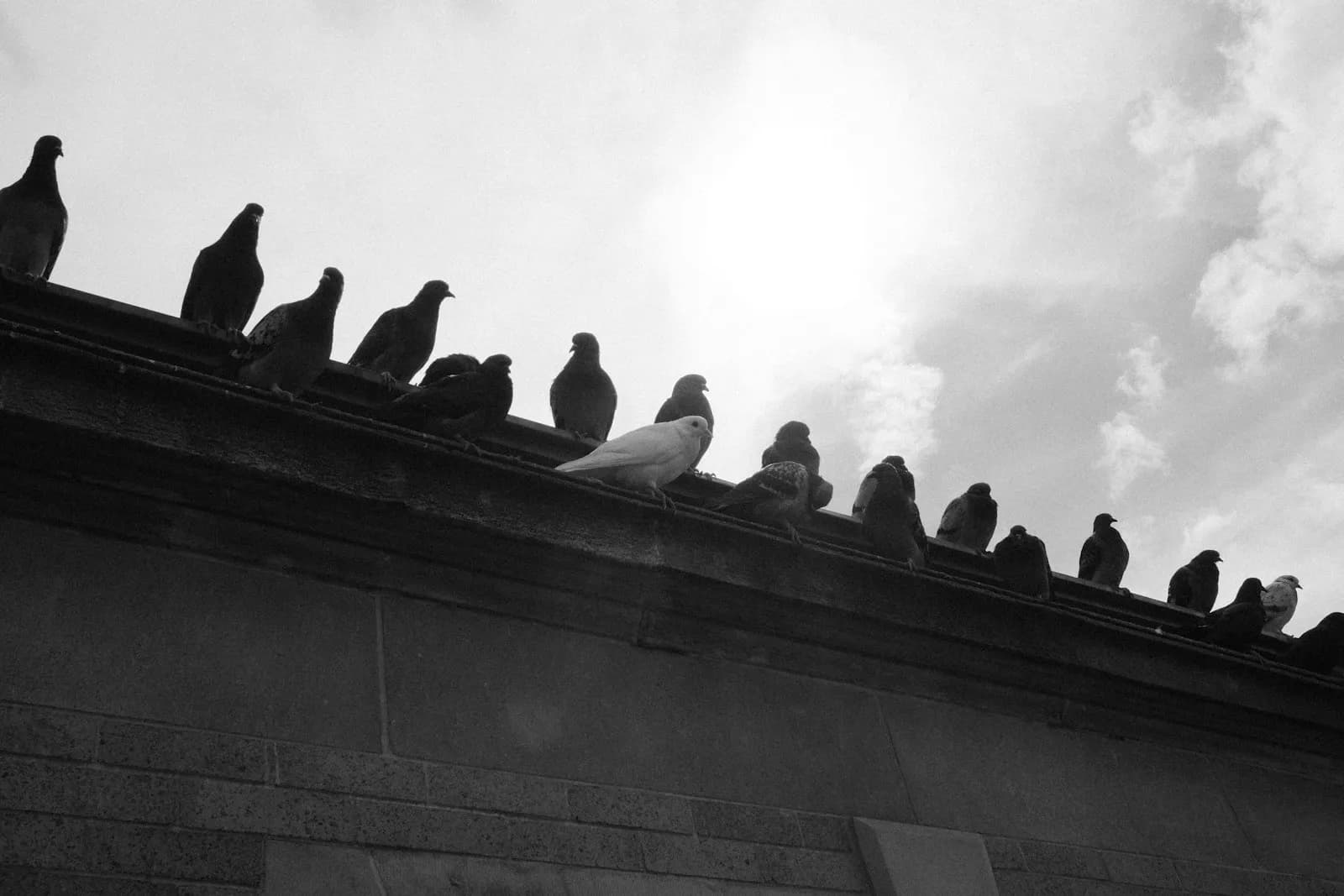
Birds have strong site fidelity. A pigeon flock evicted from a warm parapet will come back to that same parapet, because the conditions that made it attractive, shelter, warmth, a vantage point, have not changed. Bats return to a known roost. Remove the animals and leave the building exactly as it was, and you have bought a few weeks, not a solution. Exclusion is what converts a one-time removal into a lasting result.
The exclusion toolkit, and where each piece fits
Netting
Heavy-duty net stretched across an opening, a courtyard, a loading area, or the underside of a canopy, denies access to an entire zone. It is the workhorse for large openings and structural voids where birds want to fly in and roost.
Spikes and slope deterrents
On ledges, signage, beams, and parapets, stainless spikes and angled slope strips make a flat perch impossible to land on. They are mechanical, durable, and low-maintenance, the right tool for linear roosting surfaces.
Optical gel and shock track
Gel discs unsettle birds through a combination of visual and tactile cues, useful on surfaces where spikes are not practical. Electrified shock track delivers a harmless but memorable deterrent along ledges and rooflines, conditioning birds to avoid the surface. CDC notes that mechanical anti-roosting systems like stainless wire and spikes are among the more durable options, while visual and chemical deterrents typically require periodic reapplication.
Structural sealing
The most important step, and the most overlooked. Sealing the gaps around louvers, vents, roof penetrations, damaged flashing, dock seals, and man-doors closes the actual routes animals use to get inside. For bats in particular, CDC’s recommended method is to identify and seal every entry and exit point, down to the smallest hole, paired with one-way devices that let bats leave but not return.
Timing matters, especially for bats and protected birds
Exclusion is not always a same-day action. Bats cannot be sealed out during maternity season, when flightless young are present, doing so traps and kills them inside the structure and creates a worse contamination problem. Public-health guidance is to perform bat exclusion only outside the maternity window. Likewise, for protected birds with an active nest, sealing must wait until the nest is inactive. (We cover that legal timing in protected species and nest removal.) A specialist sequences the work to the biology and the law, not just the calendar.
Exclusion is a health control, not just pest control
The reason regulators and the CDC care about keeping animals out is that the droppings they leave behind are a genuine hazard. Accumulated bird and bat droppings can support Histoplasma, the fungus behind histoplasmosis, and disturbing dried droppings releases spores into the air. The cleanest way to avoid that risk is to never let the droppings accumulate, which means excluding the animals before a colony establishes. Exclusion, in other words, is upstream of the sanitation problem entirely.
The right sequence
Effective programs run in a fixed order: remove the animals, clean and sanitize what they left behind, then exclude the building so it cannot happen again. Skip the last step and you are booking the next removal. Done together, removal plus exclusion is what makes a facility durably bird- and wildlife-free, which is the only outcome worth paying for.
Sources & references
Claims in this article are drawn from the following authorities. Regulations vary by state; confirm local requirements before acting.
Related services